Glass Igloos And Ice Hotels In Lapland: 2026/27 Costs And Dates
Everyone wants to sleep under the aurora through a glass roof. Fewer people have checked what a December night in one costs, or what an ice hotel room is actually kept at.
 Written with Aino Korhonen, Lapland tour specialist and Arctic experience guide
Short answer
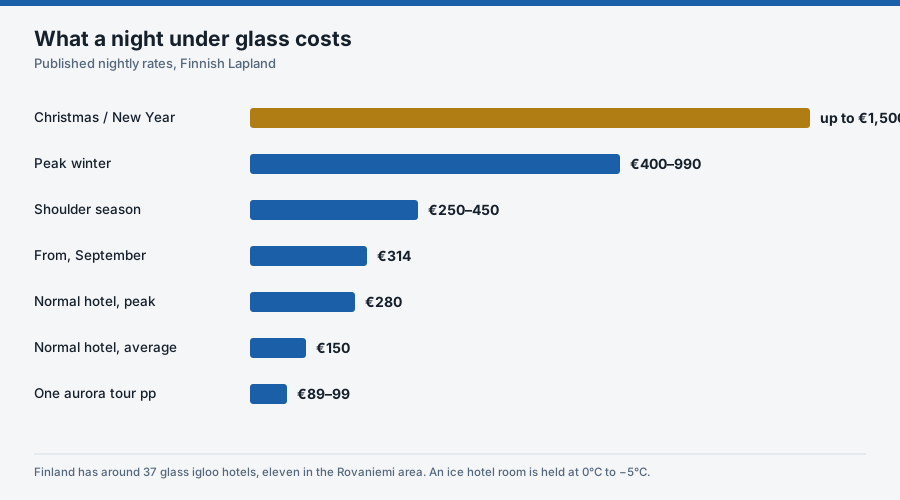
Glass igloo rates in Finnish Lapland run roughly €250 to €450 a night in shoulder season and €400 to €990 in peak, with Christmas and New Year reaching up to €1,500 at some properties. Finland has around 37 glass igloo hotels, eleven of them in the Rovaniemi area. Ice hotel rooms are held between 0°C and minus 5°C, and the Arctic SnowHotel season runs 15 December to 31 March.
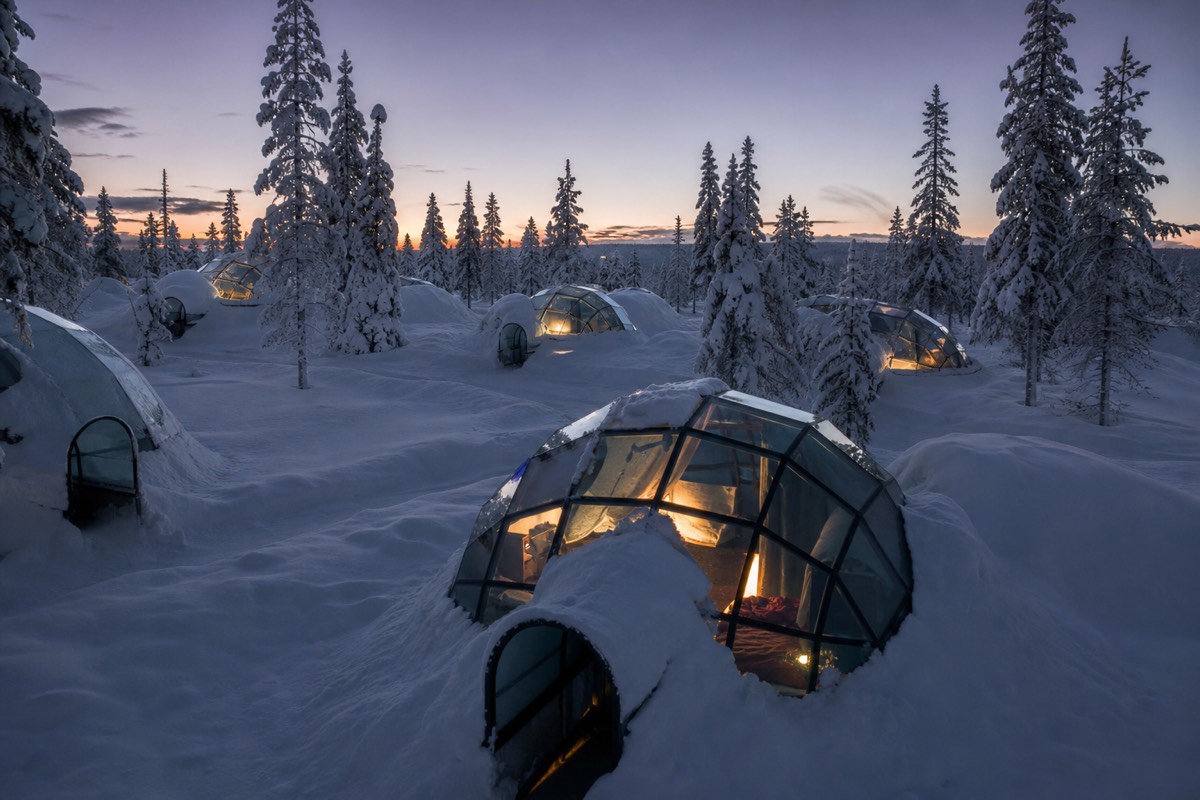
The photograph does a lot of work. Aurora overhead, glass dome, someone in a bed looking up at it. What the photograph does not tell you is that the sky was clear that night, which it often is not, and that the room cost more than the flights.
Booking takeaway: An igloo room and an aurora hunt solve different wishes. Compare a mobile photography evening if finding and photographing the lights matters more than the roof you sleep under. Explore Rovaniemi aurora photography hunt
How Much Does A Glass Igloo Cost Per Night?
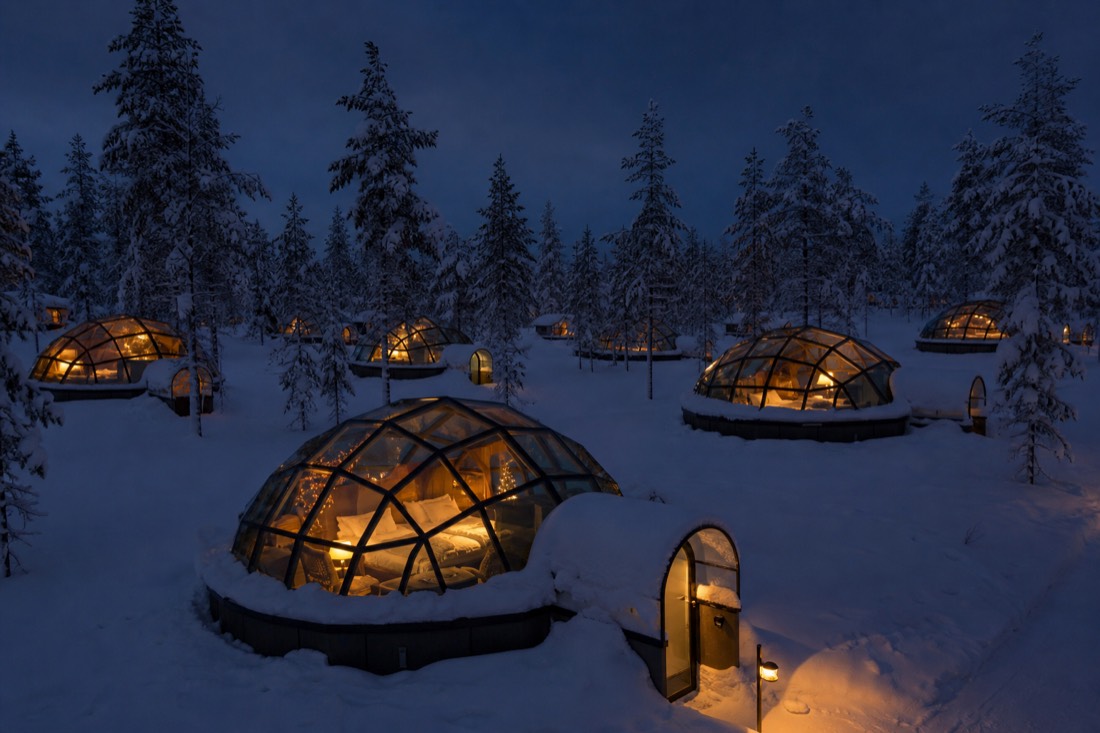
Roughly €250 to €450 a night in shoulder season, and €400 to €990 in peak winter. At some properties Christmas and New Year push up to €1,500. Rates at the Arctic SnowHotel in Rovaniemi start from around €314 in September.
That range is wide because "glass igloo" covers everything from a small dome with a bed to a suite with a private sauna. It also swings hard by date. The same room in late March and on 27 December are not close to the same price, and the aurora season covers both.
| When | Typical nightly rate | Aurora chance | Notes |
|---|---|---|---|
| September to October | From around €250 to €314 | Season open | No snow, cheapest window |
| November | €250 to €450 | Good | Snow arriving, prices climbing |
| December, first half | €400 to €990 | Good | Peak begins |
| Christmas and New Year | Up to around €1,500 | Good | The most expensive nights of the year |
| January to February | €400 to €990 | Good | Coldest, darkest, still peak pricing |
| March to April | €250 to €450 | Good until early April | Deepest snow, falling rates |
Is A Glass Igloo Worth It?
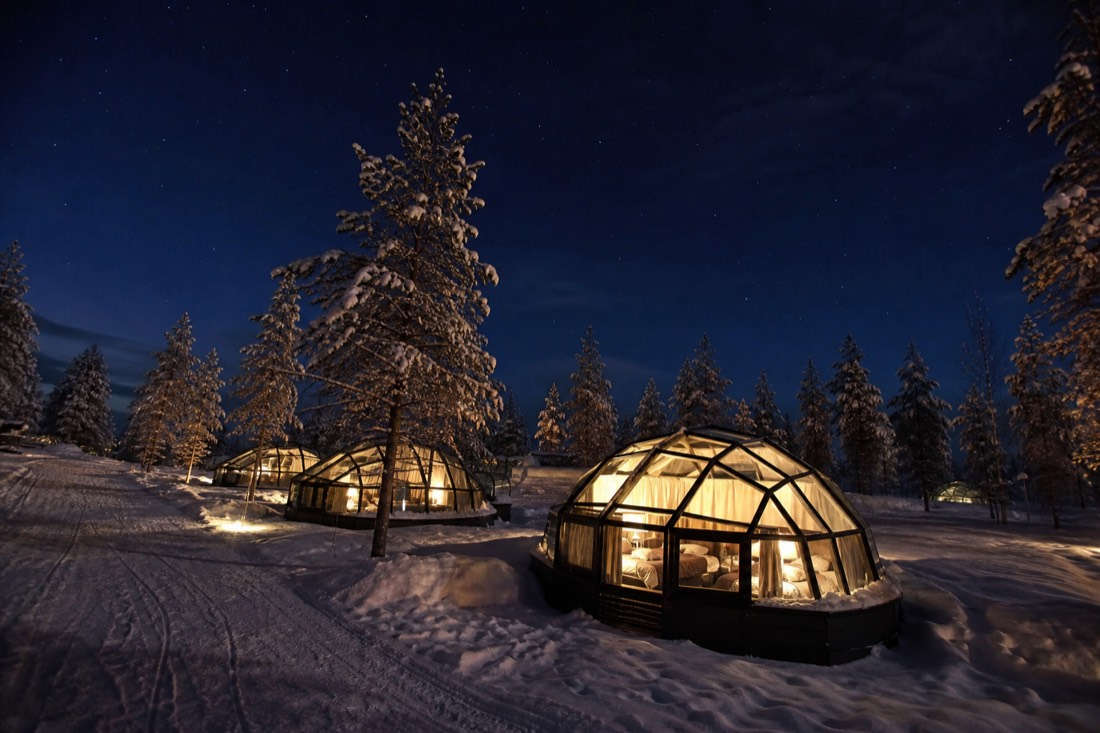
For one or two nights, for a lot of people, yes. For a whole trip, rarely. The honest problem is that you are paying a large premium for a view of a sky that is cloudy roughly as often as it is clear.
Do the arithmetic that the photographs discourage. The Finnish Meteorological Institute puts the aurora at roughly 50 per cent of dark, cloudless nights at Lapland ski resorts. Cloud is common in northern Finland in winter. So a single peak-season igloo night at €600 buys you a meaningful chance of lying in bed looking at cloud through expensive glass.
There is also a comfort point nobody mentions. A glass roof over your bed is a large cold surface. Good igloos manage it with heating and glass treatment, and a poor one is chilly and condensation-prone. Read recent reviews for exactly that.
The strategy most people land on after one trip: one or two igloo nights as the treat, a normal hotel for the rest, and guided aurora tours for the actual hunting, because a guide can drive a hundred kilometres to find clear sky and your igloo cannot move.
How Many Are There, And Where?
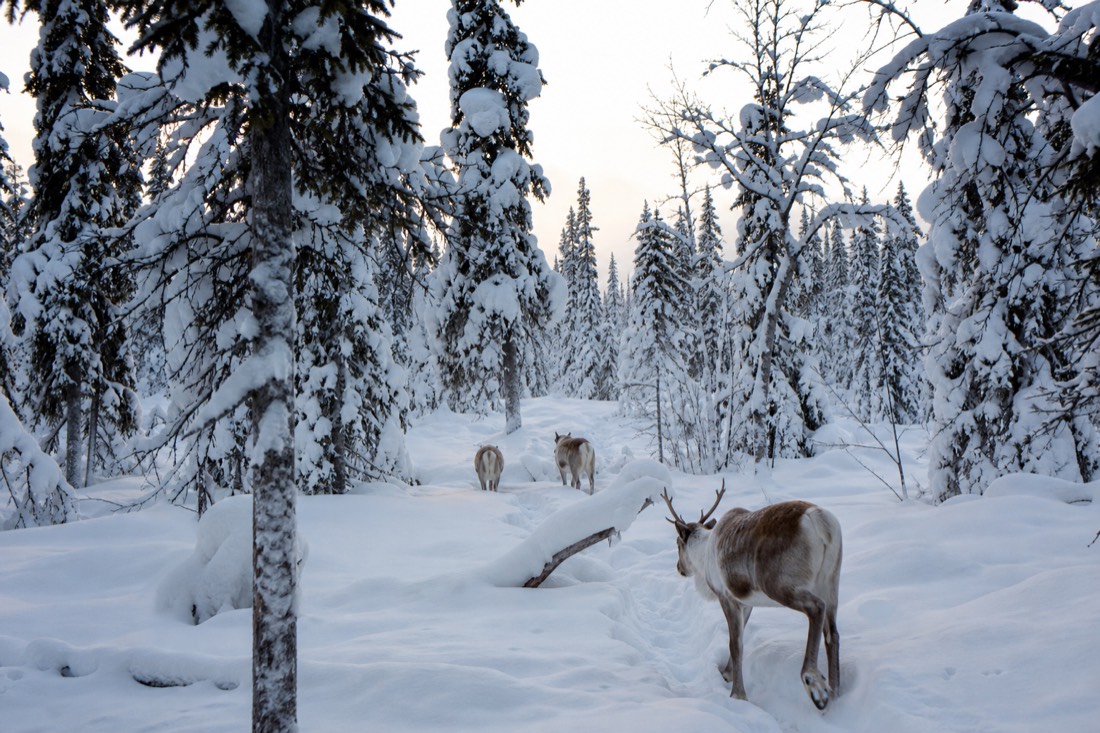
Around 37 glass igloo hotels across Finland's main Lapland regions, with eleven in the Rovaniemi area alone. It is a much larger market than the handful of famous properties suggests, and that competition is why shoulder-season rates are reasonable.
Snow season is the practical constraint on the whole category: Visit Finland puts reliable Lapland snow cover from around November to May. The famous ones are not the only ones, and the famous ones are the most expensive. If the experience matters more than the specific property, there is genuine choice, especially around Rovaniemi where eleven options compete.
Where you base yourself matters for the aurora, though less than most people assume. Rovaniemi is the most light-polluted of the main bases, and Saariselkä and Inari are darker. Our base comparison covers the trade between darkness and convenience.
What Is An Ice Hotel Actually Like?
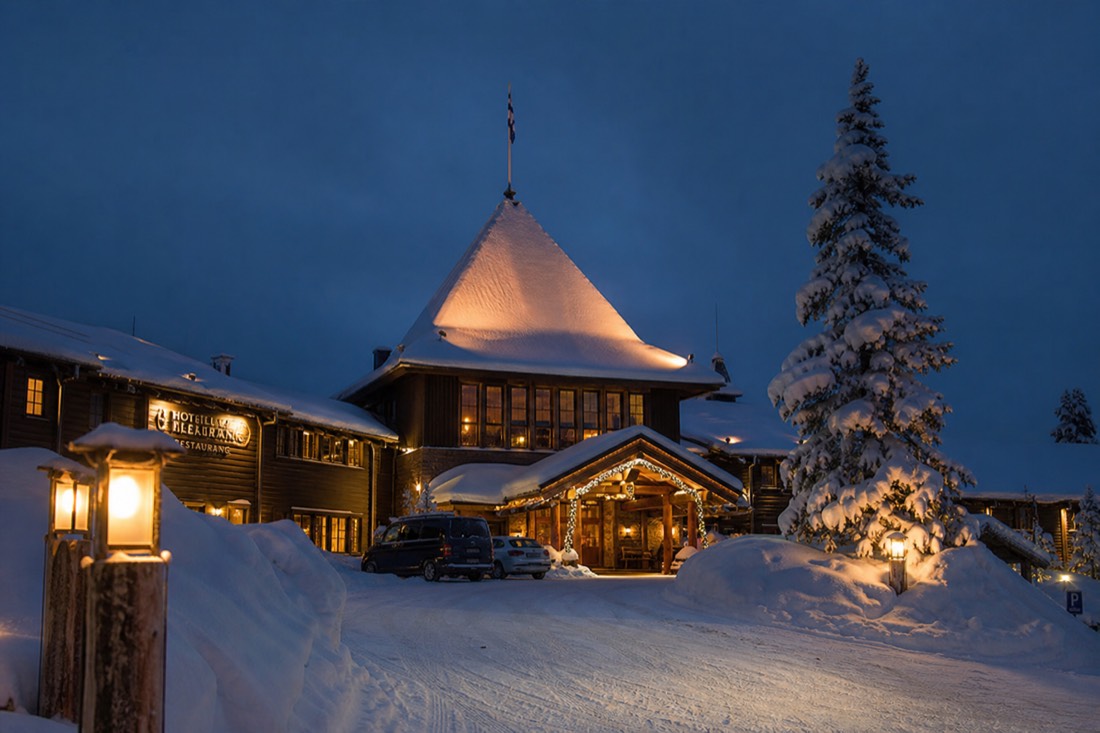
Cold, by design. Rooms are held between 0°C and minus 5°C during the winter operating season, and you sleep in a rated sleeping bag on a bed of ice and snow. The Arctic SnowHotel in Rovaniemi runs its snow rooms and ice restaurant from 15 December to 31 March.
Those season dates are firmer than most Lapland scheduling because the building is constructed fresh each winter and melts in spring. If a snow room is on your list, it constrains your travel dates more than any other single choice.
| Glass igloo | Ice hotel room | |
|---|---|---|
| Temperature | Heated, normal room comfort | 0°C to minus 5°C |
| What you sleep in | A normal bed | A rated sleeping bag on ice |
| Season | Most of the year | 15 December to 31 March |
| Aurora visible from bed | Yes, weather permitting | No |
| Bathroom | Usually en suite | Usually a warm building nearby |
| Realistic stay | One to three nights | One night, for most people |
| The appeal | The view | The story |
Almost nobody does more than one night in a snow room, and the properties know it: many sell it as a single night with a warm room either side. Treat it as an experience rather than accommodation and it makes sense.
What Are You Actually Paying The Premium For?
Not the aurora, which no room can promise. You are paying for the room itself as the experience, and it is worth separating the two lines before you book.
| What the premium buys | Reliable? | Cheaper alternative |
|---|---|---|
| A bed you can see the sky from | Yes, that is the room | None, this is the product |
| A view of the aurora from bed | No, weather decides | A guided tour that can drive to clear sky |
| Remote, dark surroundings | Usually yes | A hotel further from Rovaniemi |
| The photograph everyone wants | Yes, if the sky cooperates | A tour with a photographer included |
| A private sauna or hot tub | Property dependent | Many normal hotels have one |
| A quiet, unusual night | Yes | An ice hotel single night, for a different kind of story |
Read that first row and last row together. If what you want is the room, book the room and be pleased with it whatever the sky does. If what you want is the aurora, the room is an expensive way to buy a chance at it.
How Does The Cost Compare To Just Booking Tours?

A single peak-season igloo night can cost more than three guided aurora tours. If seeing the lights is the goal rather than the setting, the tours are the better instrument.
This is the comparison the marketing never makes. A guided aurora hunt typically runs €89 to €99 per person in Rovaniemi. Three nights of hunting for two people sits in the same range as one peak igloo night, and three attempts from a vehicle that can chase clear sky beats one attempt from a fixed roof.
That is not an argument against igloos. It is an argument for being clear about which one you are buying: the view and the room, or the odds. Our aurora guide works through how the odds actually stack up across multiple nights, and the cost guide sets the whole trip budget out.
When Is Each Of These Actually Available?
The two products have completely different calendars, and the ice one is much tighter than people assume. Snow and ice structures are built new each winter and melt every spring, so their season is fixed by physics rather than by demand.
| Where you might stay | Season | Why the dates are what they are |
|---|---|---|
| Ice hotel or snow room | 15 December to 31 March | Rebuilt from scratch each winter, then it melts |
| Glass igloo or glass-roofed cabin | Most of the year | A permanent building, so no seasonal limit |
| Aurora viewing from either | Late August to early April | The aurora season, which is longer than the snow season |
| Aurora viewing with snow outside | Roughly November to April | Where the two seasons overlap |
Read the first and third rows together and a mismatch appears. The ice hotel season is shorter at both ends than the aurora season, so an early-October aurora trip cannot include a snow room, and a mid-April trip has missed it. The glass igloo has no such problem and is the reason most people booking late in the season end up there instead.
The overlap row is the one that actually matters for planning. Snow cover in Rovaniemi runs roughly November to May per Visit Finland, and Lapland's winter begins around mid-October and lasts about 200 days on the Finnish Meteorological Institute's normals. If you want deep snow outside the glass and a running aurora season above it, the window is broad. If you want to sleep on ice, it is fifteen weeks.
What Do You Give Up By Staying In One?
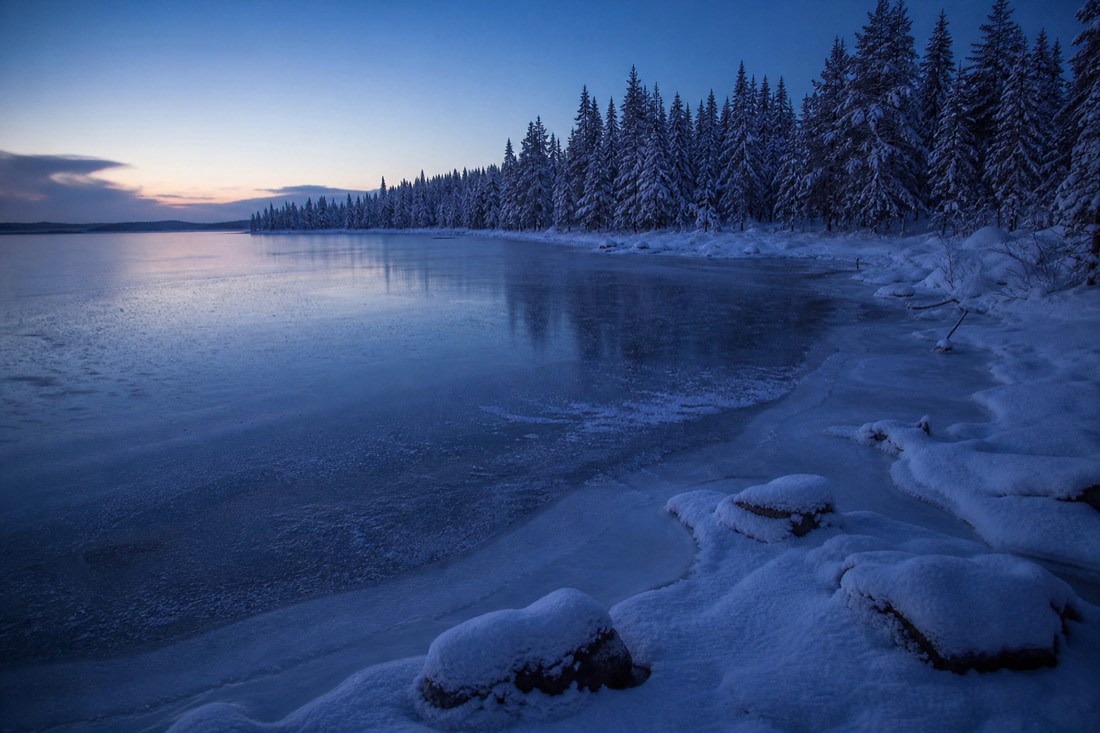
Location, mostly, and a certain amount of sleep. These properties sit outside town for the darkness that makes them work, which puts distance between you and the activity market you also came for.
This is the part the photographs never show, and it is not an argument against booking one. It is an argument for booking one night rather than a week.
| What you gain | What it costs you | Does it matter |
|---|---|---|
| Dark sky directly overhead | Distance from Rovaniemi and its tours | Yes, transfers eat time in a short trip |
| Aurora visible from bed | Only if the sky cooperates that night | This is the whole gamble |
| A genuinely memorable room | A price well above a normal hotel night | For one night, usually worth it |
| No need to join a tour to see it | A fixed spot, so no driving to clear sky | A tour can relocate, your bed cannot |
| A story worth telling | Broken sleep, checking the sky | Most people accept this happily |
The fourth row is the one people work out too late. A guided aurora tour's real advantage is that it moves, and a guide willing to drive a hundred kilometres for a gap in the cloud is doing the one thing that changes your odds. A glass igloo is a fixed point. If the cloud sits over it, that is the night.
The sensible structure most people land on is one night in the glass, the rest in town, and separate aurora tours on the other nights. That way the fixed bet is small and the moving bets are where the odds are. Our aurora guide runs the arithmetic on why the number of attempts beats everything else.
What Aino Tells People Considering A Glass Igloo
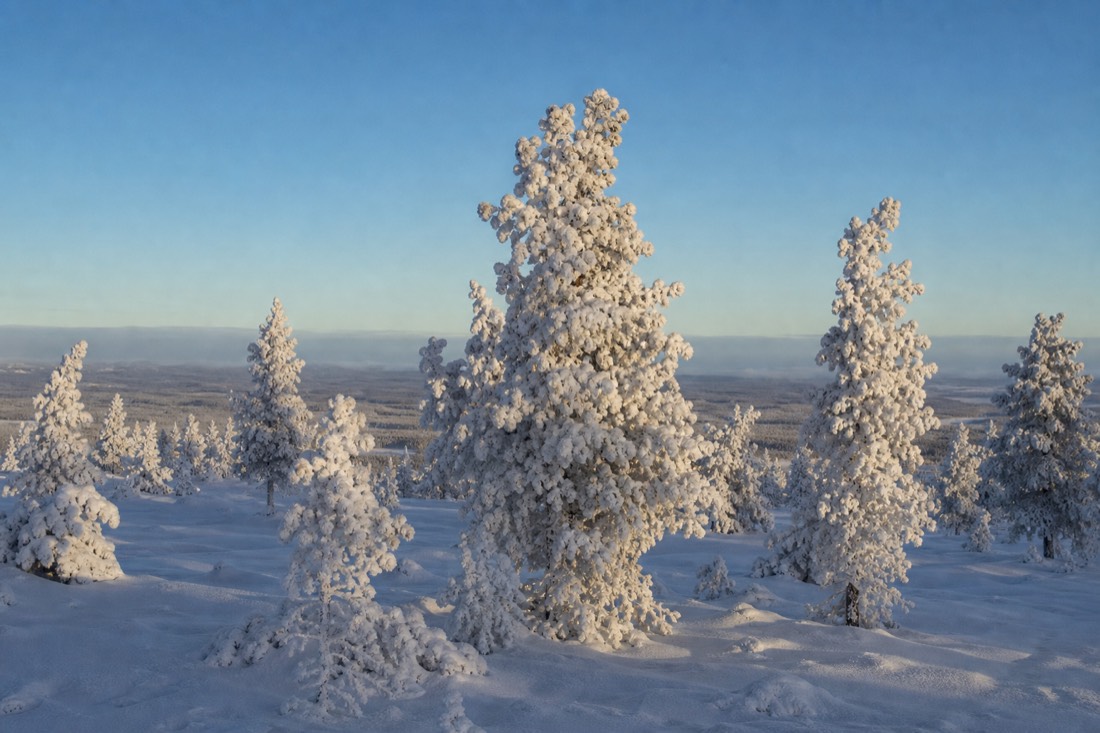
Aino Korhonen has planned Lapland trips since 2023 and by her own count has worked with more than 250 international travellers. The glass igloo question comes up on almost every enquiry, and her answer has not changed.
Book one night, not the trip. The room is the experience, and the second night in it is much less remarkable than the first while costing exactly the same. Travellers who spread the budget across one igloo night plus two extra aurora tours consistently come home happier than the ones who spent it all on glass.
Do not treat it as your aurora plan. It is a beautiful place to be if the lights appear and an expensive room if they do not, and roughly half of dark, cloudless nights show aurora at Lapland ski resorts per the Finnish Meteorological Institute. That is a coin flip you cannot re-run from a fixed bed.
And check the transfer before you book, not after. These properties sit outside town by design, so a night in one usually removes a day of activities at either end unless the location happens to line up with what you booked.
| The plan | How it usually goes | Better version |
|---|---|---|
| A week in a glass igloo | Expensive, and the novelty fades by night two | One night, in the middle of the trip |
| The igloo instead of aurora tours | A fixed bet on one patch of sky | Igloo plus separate tours on other nights |
| Igloo on the first night | Jet lag, late arrival, missed entirely | Put it after you have found your feet |
| Ice hotel in April | The season ended on 31 March | Glass igloo, which runs most of the year |
| Booking it as the accommodation | Distance eats the activity days | Town for the trip, igloo for one night |
If the budget is the real constraint here, our budget guide covers what to cut and what never to cut, and the igloo is squarely in the first category.
Common Questions
How much does it cost to stay in a glass igloo in Finland?
Roughly €250 to €450 a night in shoulder season and €400 to €990 in peak winter, with Christmas and New Year reaching around €1,500 at some properties. Rates at the Arctic SnowHotel start from about €314 in September.
Are the glass igloos heated?
Yes, they are heated rooms with normal beds, unlike ice hotel rooms. Quality varies in how well the glass and heating are managed, so read recent reviews for comments on cold spots and condensation.
Will I definitely see the northern lights from one?
No. The aurora appears on roughly half of dark, cloudless nights at Lapland ski resorts, and cloud is common in winter. An igloo cannot move to find clear sky, which is the one thing a guided tour can do.
How cold is an ice hotel room?
Between 0°C and minus 5°C in the snow and ice rooms during the winter operating season. You sleep in a rated sleeping bag on an insulated ice bed, and warm facilities are in a separate building nearby.
When can you stay in an ice hotel?
The Arctic SnowHotel in Rovaniemi runs from 15 December to 31 March. The dates are firm because the building is constructed fresh each winter and melts in spring, so it constrains your travel dates more than most choices.
Your next booking step
Editorial starting point · confirm your party’s requirements below
Rovaniemi Aurora Photography Hunt
Have your travel dates in mind? Go looking for clear skies with a professional photographer; tripods and edited photographs are included. Check the outing before arranging the rest of your day.
Allow 5–7 hours. English guide, maximum 8 guests, minimum age 8 and minimum 2 per booking. Warm clothing, boots, drinks and snacks included; pickup within 10 km of Rovaniemi (city-centre guests meet at the office). No sighting guarantee.
Compare options and tailor this choice
Choose only the details you know. These filters help compare outings; the operator confirms suitability and dates.
Party ages and access requirements
Go looking for clear skies with a professional photographer; tripods and edited photographs are included.
Allow 5–7 hours. English guide, maximum 8 guests, minimum age 8 and minimum 2 per booking. Warm clothing, boots, drinks and snacks included; pickup within 10 km of Rovaniemi (city-centre guests meet at the office). No sighting guarantee.
Follow the evening weather on a guided aurora search with photographs sent afterwards.
Ages 1+. 4–6 hours; central meeting at Koskikatu 22. Thermal clothing, hot drinks and cookies included; dinner excluded. Can take up to 48 guests. No aurora refund is subject to the operator’s exact terms; it does not guarantee a sighting.
Drive a husky team through the forest, then meet the dogs over a hot drink.
About 2 hours at Apukka; allow roughly 3.5 hours with transfers. Thermal overall, boots, socks and mittens included. Transfers from Rovaniemi centre or Santa Claus Village. Listed ages 2–75; children ride with an adult; adults must be able to control the sled. Guides do not drive it for you. Not suitable for pregnancy or mobility limitations.
Compare your actual quotes
Enter total quotes for the same people and inclusions, in one currency. Add transport, gear and supplements before comparing.
None of these outings fits those choices. Adjust a filter or reset to compare the original options.
Published departure schedule loading. Availability and final price are confirmed on Viator.
Affiliate links: we may earn a commission if you book, at no extra cost to you. Dates, options and the final price are confirmed by the provider.